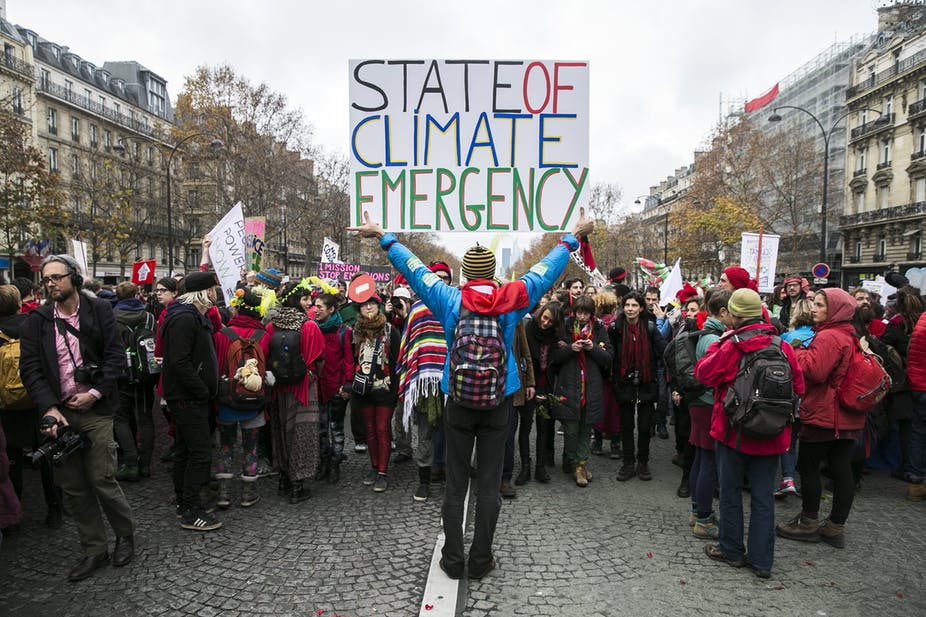
At the COP24 conference in Poland, countries are aiming to finalise the implementation plan for the 2015 Paris Agreement. The task has extra gravity in the wake of the recent IPCC report declaring that we have just 12 years to take the action needed to limit global warming to that infamous 1.5ᵒC target. Although the conference itself is open to selected state representatives only, many see the week as an opportunity to influence and define the climate action agenda for the coming year, with protests planned outside the conference halls. A crucial role of environmental activists is to shift the public discourse around climate change and to put pressure on state representatives to act boldly. COP24 offers a rare platform on which to drive a step change in the position of governments on climate change. However, many environmental movements in Europe are not offering the critical analysis and radical narratives needed to achieve a halt to climate change. Read more: Extinction Rebellion: I'm an academic embracing direct action to stop climate change
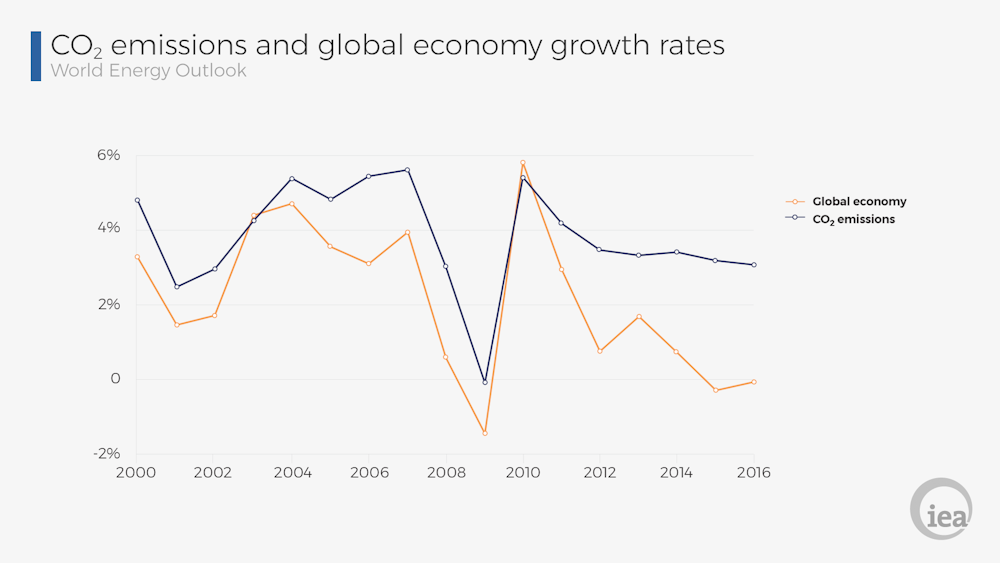 Economic growth and carbon emissions are closely linked. International Energy Agency
Practically, what this means is that as long as economic growth continues to expand rapidly and indefinitely, so too will the quantity of CO₂ in the atmosphere and the associated environmental and social impacts.
To address climate change, therefore, we must address the root cause of this planetary ailment: the ideology of growth first, growth always. By moving away from growth-oriented societies in Europe and other advanced economies, towards ones that prioritise environmental and social health, we stand the slimmest chance of solving our climate crisis, while still allowing the poorest economies globally to meet their economic needs.
Economic growth and carbon emissions are closely linked. International Energy Agency
Practically, what this means is that as long as economic growth continues to expand rapidly and indefinitely, so too will the quantity of CO₂ in the atmosphere and the associated environmental and social impacts.
To address climate change, therefore, we must address the root cause of this planetary ailment: the ideology of growth first, growth always. By moving away from growth-oriented societies in Europe and other advanced economies, towards ones that prioritise environmental and social health, we stand the slimmest chance of solving our climate crisis, while still allowing the poorest economies globally to meet their economic needs.

Leben im Bauwagen von Marc Menningmann auf Vimeo Der Fotograf Nico Baumgarten öffnete während der Degrowth Konferenz in Leipzig seinen Bauwagen für Passant_Innen. Wer wollte, konnte sich einen Eindruck von seiner Lebensweise machen und seine Fotoserie "Welcome Home" anschauen, die sich mit alternativen Wohnformen beschäftigt. Im Film erzählt er, was ihn zu dieser Aktion motiviert hat, un...
In ihrem Audio-Interview mit den Organisator/innen der nächsten KarmaKonsum Konferenz macht sich Angelika Zahrnt für eine Suffizienzpolitik stark. Download MP3 (27.4 MB) Hier geht es zum Programm der Konferenz.

Interview mit Christine Bauhardt Prof. Dr. Christine Bauhardt ist Professin für Gender und Globalisierung an der Humboldt Universität in Berlin. Ihre Forschungsschwerpunkte sind Gesellschaftliche Naturverhältnisse und Geschlechterverhältnisse, Feministische Ökonomiekritik sowie Migration und Stadtentwicklung. Für die Interview-Reihe des Stream towards Degrowth hat sie unsere Fragen auf Englis...