From the text: The Manifesto has already received strong criticism from an array of commentators, but none of these assessments has yet critiqued it from the perspective of “degrowth,” which is an approach that sees the transition to sustainability occurring through less environmentally impactful economic activities and a voluntary contraction of material throughput of the economy, to reduce humanity’s aggregate resource demands on the biosphere. From a degrowth perspective, technology is not viewed as a magical savior since many technologies actually accelerate environmental decline. With these disagreements in mind, a group of over fifteen researchers from the degrowth scholarship community has written a detailed refutation of the Ecomodernist Manifesto. . .
Authors and Endorsers: Jeremy Caradonna, Iris Borowy, Tom Green, Peter A. Victor, Maurie Cohen, Andrew Gow, Anna Ignatyeva, Matthias Schmelzer, Philip Vergragt, Josefin Wangel, Jessica Dempsey, Robert Orzanna, Sylvia Lorek, Julian Axmann, Rob Duncan, Richard B. Norgaard, Halina S. Brown, Richard Heinberg > Full article
Last month a group of academics working in the fields of development and environmental sciences in the Netherlands wrote a manifesto for post-corona recovery based on degrowth principles. This initiative gained widespread attention, pushing the degrowth agenda into (Dutch) mainstream consciousness and the traditional corridors of power. The initiative was born in conversations that various a...
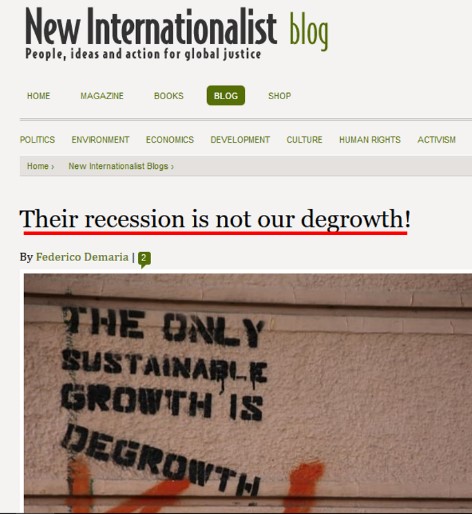
In a recent article with Stefan Drews, we discussed why degrowth might be an unfortunate name and slogan for the alternative economics movement. We listed several expressions that could possibly be better, but we were also upfront about their disadvantages. Here I propose a new term that might combine the advantages of the word degrowth with those of its more positive alternatives. For an asse...
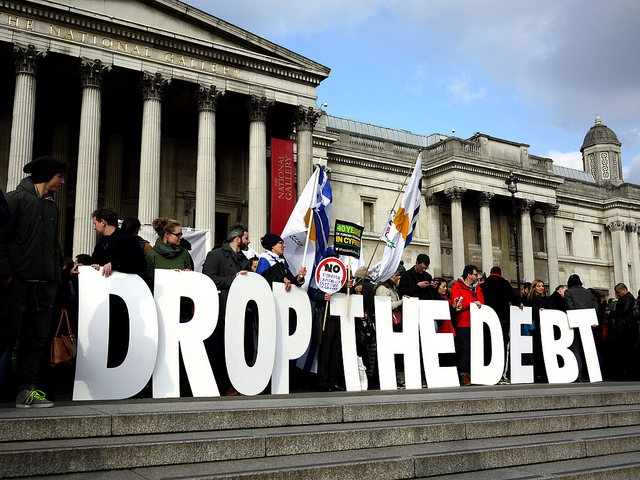
By Panos Petridis and Angelos Varvarousis “I’m a pessimist because of intelligence, but an optimist because of will” (A. Gramsci) We might err, but we believe that in the night of the elections in January 2015 a symbolic “tipping point” has been reached in Greece, signifying a break with a one way pre-dictated future, and adding vital fresh wind by pointing to the possibility of multiple al...